Introduction
In the automotive industry, where precision and reliability are non-negotiable, effective containment control plays a vital role in maintaining product integrity and protecting the supply chain.
Two of the most commonly used containment levels are CSL1 and CSL2 — terms often mentioned in supplier quality agreements, yet not always fully understood.
This article explains what CSL1 and CSL2 mean, how they differ, and why implementing them correctly can make the difference between a temporary issue and a long-term partnership failure.
What Is Containment?
Containment refers to the temporary quality control process applied when a supplier’s product is suspected of not meeting the customer’s specifications.
The goal is to isolate, inspect, and correct non-conforming parts before they reach the customer’s production line.
Containment is not a punishment — it is a protective measure designed to:
- Prevent defective components from reaching OEM or Tier assembly plants;
- Protect the customer’s production flow and reputation;
- Give the supplier time to investigate and permanently eliminate the root cause.
CSL1 – Controlled Shipping Level 1
CSL1 (Controlled Shipping Level 1) is the first level of customer-mandated containment.
It requires the supplier to implement an internal 100% inspection of parts before shipping, in addition to normal production checks.
Typical requirements:
- Establishment of a dedicated containment area;
- Inspection performed by the supplier’s internal team;
- Immediate segregation of non-conforming products;
- Detailed inspection records submitted to the customer;
- Corrective action plan initiated simultaneously.
CSL1 remains in place until several consecutive shipments (often 30–60 days) are verified as defect-free and the customer formally lifts the containment.
CSL2 – Controlled Shipping Level 2
CSL2 (Controlled Shipping Level 2) is applied when CSL1 fails or when the customer’s confidence in the supplier’s quality system has been seriously affected.
Unlike CSL1, CSL2 introduces an independent third-party inspection.
This external team — often specialized in quality sorting, rework, and resident engineering — performs verification after the supplier’s own CSL1 process.
Key differences vs. CSL1:
- The inspection is performed by a certified third-party provider such as Compact Service ABC;
- Additional layer of control between the supplier and the OEM;
- On-site reporting to both supplier and customer;
- Continued until process capability and trust are restored.
CSL2 represents a serious escalation and typically involves higher costs and closer monitoring from the customer.
Why Containment Matters
Both CSL1 and CSL2 serve one ultimate purpose: to protect the customer from defective product while ensuring that the supplier quickly restores process stability.
Proper containment management delivers several critical benefits:
- Prevention of line shutdowns and penalties;
- Retention of supplier approval status;
- Faster root cause analysis and corrective actions;
- Enhanced traceability and documentation for audits;
- Long-term improvement of process discipline.
For many suppliers, partnering with a certified containment provider ensures faster compliance and professional on-site execution.
Compact Service ABC – Certified Containment Partner
With over 25 years of experience in the automotive and industrial sectors, Compact Service ABC offers full containment and quality support services:
- CSL1 / CSL2 containment and sorting;
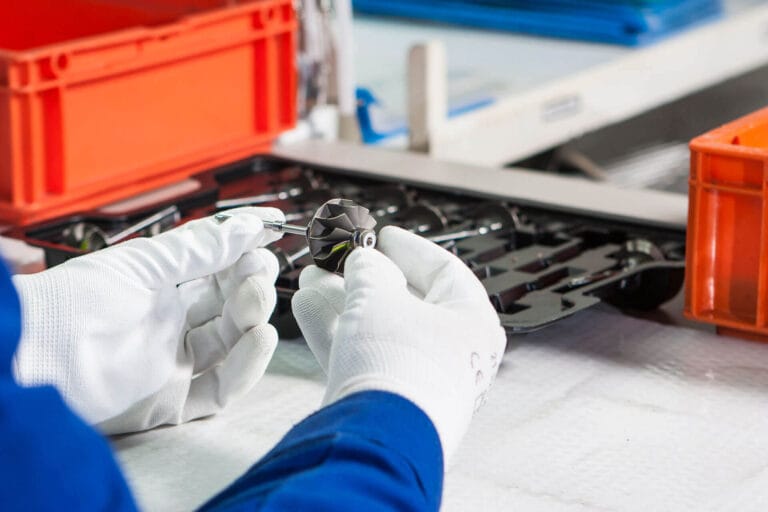
- Visual, dimensional, and functional inspection;
- Rework, repackaging, and VMI services;
- Resident engineers and audit assistance;
- IATF 16949–compliant documentation and reporting.
Our containment teams operate on-site, in our 4000 m² facility in Bucharest, or directly at the customer’s plant — across Romania and the EU.
Conclusion
Containment is not simply about inspection — it’s about trust, traceability, and recovery.
Whether through CSL1 internal controls or CSL2 external verification, proper containment ensures that problems are managed before they escalate and that quality relationships remain intact.
For professional containment support, contact:
📧 office@compactservice.ro | 🌐 www.compactservice.ro