— The foundation of accuracy, reliability, and repeatable quality in modern manufacturing —
Introduction
In the automotive industry, precision isn’t optional — it’s fundamental.
Every part, from a simple bracket to a complex engine housing, must meet strict dimensional and functional requirements.
One of the key technologies that enables this precision is CNC machining (Computer Numerical Control) — a process that combines automation, advanced tooling, and digital control to produce consistent, high-quality parts.
At Compact Service ABC, CNC machining plays a central role in delivering certified quality to automotive OEMs and Tier suppliers across Europe.
What Is CNC Machining?
CNC machining is a computer-controlled manufacturing process that uses programmed commands to operate cutting tools with exceptional accuracy.
Unlike manual machining, where results depend on operator skill, CNC machines follow digital CAD/CAM instructions with repeatability down to microns.
Typical CNC operations include:
- Milling – shaping materials with rotating cutters;
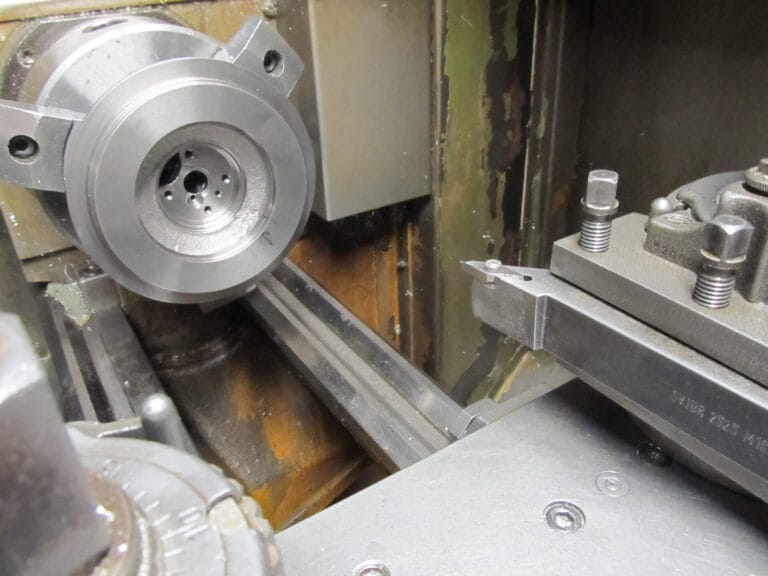
- Turning – removing material from cylindrical parts;
- Drilling and threading – creating precise holes and threads;
- Deburring and surface finishing – ensuring clean and functional edges;
- Laser engraving – permanent part identification and traceability.
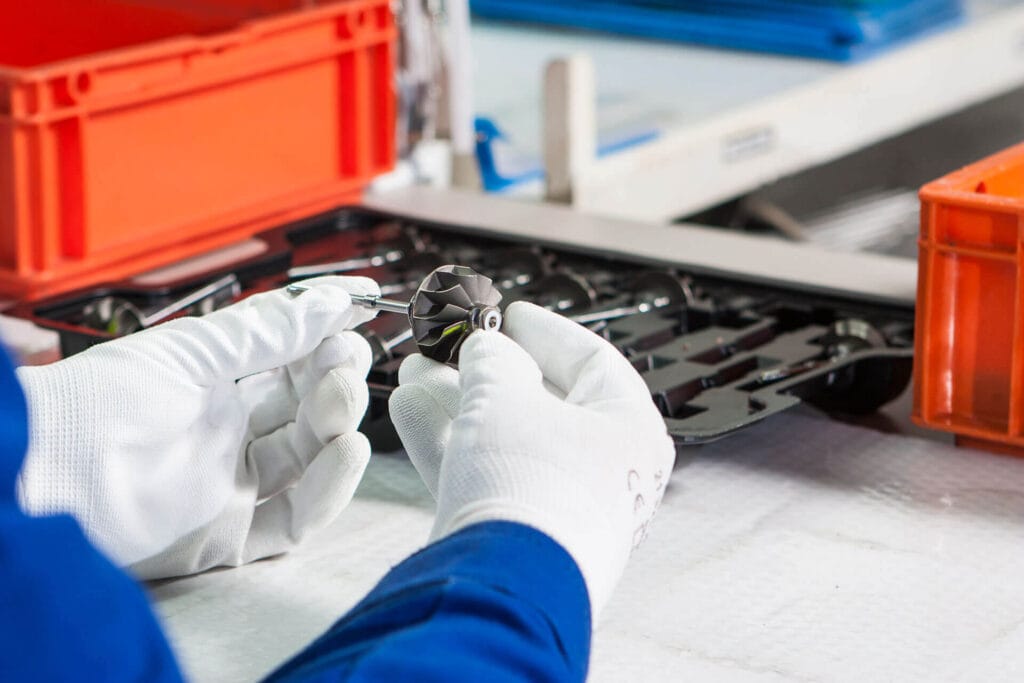
By integrating these processes under a single digital system, manufacturers achieve precision, consistency, and efficiency even in large-scale production.
The Role of CNC Machining in Automotive Manufacturing
Automotive components are subject to stringent tolerances, often within ±0.01 mm.
Such accuracy is crucial for performance, safety, and compliance with international standards such as IATF 16949 and ISO 9001.
CNC machining enables:
- Dimensional precision – ensuring perfect fit between mating parts;
- Material consistency – maintaining identical characteristics across batches;
- Surface quality – optimizing friction, sealing, and assembly performance;
- Process repeatability – guaranteeing stable results over thousands of cycles.
In other words, CNC machining transforms engineering design into measurable, repeatable quality.
From Prototype to Series Production
CNC machining supports all stages of product development — from one-off prototypes to high-volume series production.
Prototyping
- Rapid iteration and testing of design concepts;
- Small-batch samples for validation and PPAP submission;
- Optimization of geometry before tooling investment.
Small- to Medium-Series
- Flexible production without costly molds or dies;
- Ideal for spare parts, assembly tools, or low-volume variants.
Large-Series and Continuous Supply
- Automated programs and multi-axis machines ensure repeatability;
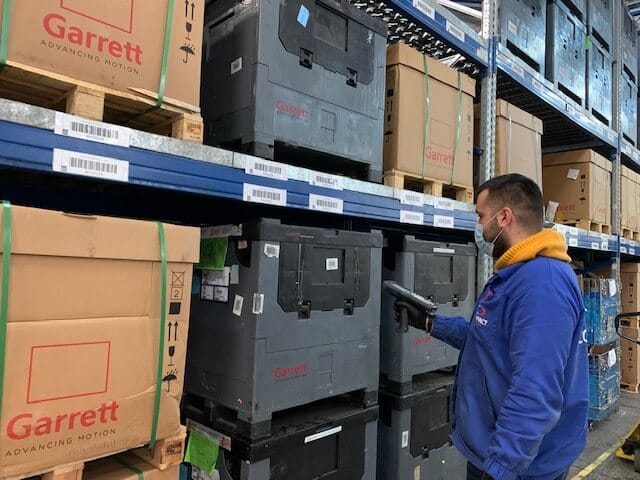
- Integration with quality control systems for dimensional verification and traceability.
At Compact Service ABC, these stages are unified under one system — from digital programming to final inspection — ensuring total control and reliability.
Materials and Applications
CNC machining is compatible with a wide range of materials used in automotive engineering, including:
- Steel and stainless steel – for structural and engine components;
- Aluminum and cast iron – for housings, brackets, and supports;
- Brass, bronze, and copper alloys – for precision connectors and fittings;
- Engineering plastics (PA, POM, PTFE) – for lightweight or insulating parts.
Applications include:
- Powertrain and engine components;
- Chassis and suspension elements;
- Tooling, fixtures, and measuring gages;
- Molds and spare parts for production equipment.
Quality Control and Inspection
At Compact Service ABC, CNC machining is fully integrated with metrology and quality assurance processes.
Every machined part undergoes:
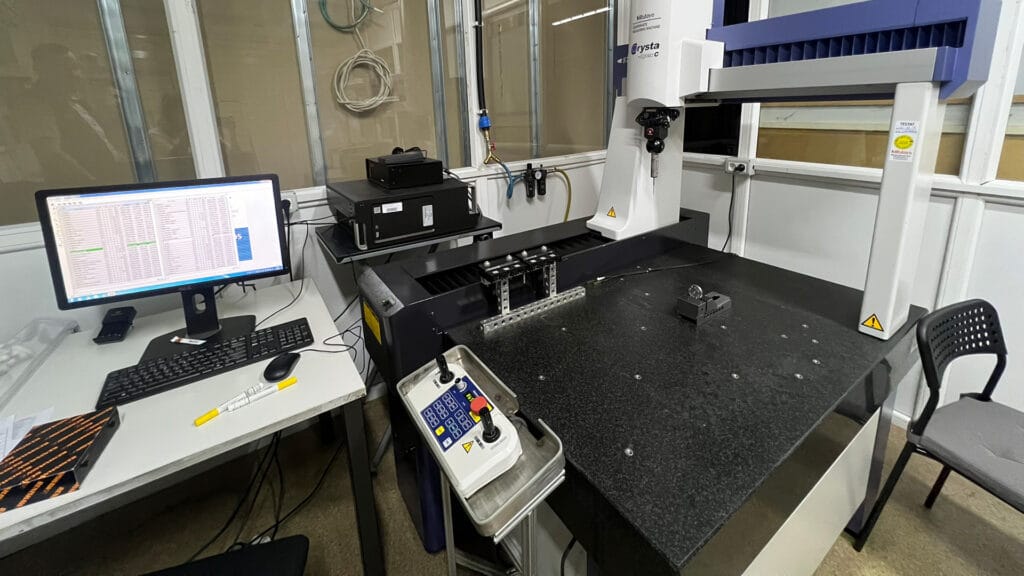
- Dimensional verification with CMM (Coordinate Measuring Machine);
- Surface roughness and profile measurement;
- Traceability documentation (PPAP / FAI);
- Final visual and functional inspection.
This ensures compliance not only with customer specifications but also with automotive-grade documentation standards.
Advantages of CNC Machining in the Automotive Sector
- Precision and Consistency – micrometric tolerances across all batches.
- Repeatability – identical quality even in long production runs.
- Scalability – adaptable from prototypes to mass production.
- Versatility – applicable to metals, alloys, and engineering plastics.
- Traceability – digital records for every part and process.
- Compliance – aligned with IATF 16949 and Tier 1–3 requirements.
Compact Service ABC – Certified CNC Partner
With over 25 years of experience, Compact Service ABC delivers IATF 16949–certified machining and assembly services for the automotive industry.
Our capabilities include:
- CNC milling and turning
- Deburring, engraving, and precision finishing
- Assembly of mechanical and subcomponent systems
- Dimensional inspection and CMM verification
- Small to large series production
- Corrective machining and spare part manufacturing
All processes are supported by internal metrology and full traceability documentation — ensuring precision “The Quality Way”.
Conclusion
CNC machining represents more than technology — it’s the backbone of precision manufacturing in the automotive world.
By combining automation, digital control, and certified quality systems, companies like Compact Service ABC ensure every component meets the same high standards — from the first prototype to the millionth part.