— Ensuring quality, safety, and accountability through complete production control —
In the automotive industry, traceability is not optional — it’s essential.
Every part, process, and supplier must be traceable to ensure that products meet quality, safety, and regulatory requirements.
From raw materials to finished components, traceability systems create a digital footprint that connects every stage of manufacturing — enabling fast containment, root cause analysis, and continuous improvement.
At Compact Service ABC, traceability is at the core of our certified quality system (IATF 16949), ensuring every measurement, machining operation, and inspection can be tracked, verified, and reported with precision.
What Is Traceability?
Traceability refers to the ability to track and record the history, application, and location of a product or component throughout its lifecycle.
In automotive manufacturing, this means being able to answer three critical questions at any moment:
- Where did it come from? — supplier, batch, and material origin.
- What happened to it? — process steps, equipment, and quality checks performed.
- Where is it now? — assembly position, customer delivery, or service location.
A complete traceability system integrates these answers into a structured, data-driven approach that supports quality assurance, audits, and corrective actions.
Why Traceability Matters
The importance of traceability in the automotive supply chain goes beyond compliance — it’s about protecting the brand, the customer, and the final product.
Key benefits include:
- Defect prevention and early detection – identifying issues before products leave the factory;
- Faster root cause analysis – pinpointing exactly where and when a deviation occurred;
- Reduced recall costs – isolating affected parts instead of recalling entire batches;
- Regulatory and customer compliance – meeting IATF 16949, ISO 9001, and OEM requirements;
- Process improvement – using traceability data for continuous optimization and risk reduction.
Without proper traceability, even small quality issues can escalate into costly production stops or recalls.
Types of Traceability in Automotive Manufacturing
There are two primary categories of traceability systems:
1. Product Traceability
Focuses on identifying each individual component or batch through unique markings, labels, or codes.
Examples include:
- Part numbers, lot codes, or serial numbers;
- Laser-engraved identifiers on machined parts;
- Barcode or QR code tracking for logistics.
2. Process Traceability
Captures data related to how each component was produced, such as:
- Machine and operator IDs;
- Process parameters and measurement results;
- Inspection reports, PPAP and FAI documentation;
- Equipment calibration and maintenance records.
Both types work together to provide full transparency and accountability across the production chain.
Traceability in the IATF 16949 Quality System
The IATF 16949 standard requires manufacturers and suppliers to maintain traceability throughout the entire production process.
This includes:
- Linking parts to their material batches and process data;
- Maintaining inspection and test records;
- Storing documentation for defined retention periods;
- Ensuring traceability extends to sub-suppliers and external partners.
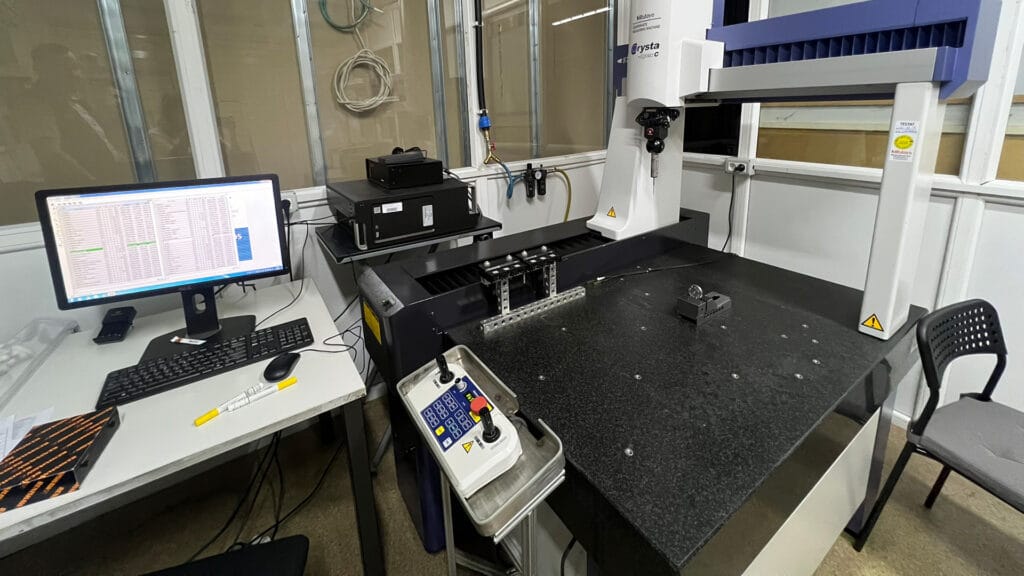
At Compact Service ABC, every machining, inspection, and metrology operation is documented and traceable — from CMM measurement reports to final product labeling and customer delivery logs.
Tools and Technologies for Effective Traceability
Modern traceability relies on a mix of hardware, software, and process control tools, such as:
- Laser engraving and part marking systems;
- Barcode and RFID identification;
- ERP and MES integration for digital process recording;
- Automated data collection from measurement and CNC systems;
- Digital PPAP and FAI documentation.
These systems provide real-time visibility into production and quality data — turning traceability from a compliance task into a strategic quality tool.
Compact Service ABC – Measurable Quality Through Traceability
As part of our certified quality system, Compact Service ABC ensures:
- Full traceability for all machined and assembled components;
- Digital storage of inspection and metrology data;
- PPAP and FAI reports with documented measurements;
- Process and equipment calibration traceability;
- Compliance with IATF 16949 and OEM-specific requirements.
Our commitment to traceability allows us to deliver not just parts — but documented precision, accountability, and reliability.
Conclusion
In modern automotive manufacturing, traceability is the backbone of quality control and customer confidence.
It provides the data needed to react quickly, prevent defects, and continuously improve production systems.
By combining advanced measurement, certified quality processes, and traceable documentation, Compact Service ABC ensures that every component tells a complete story — from raw material to finished product.